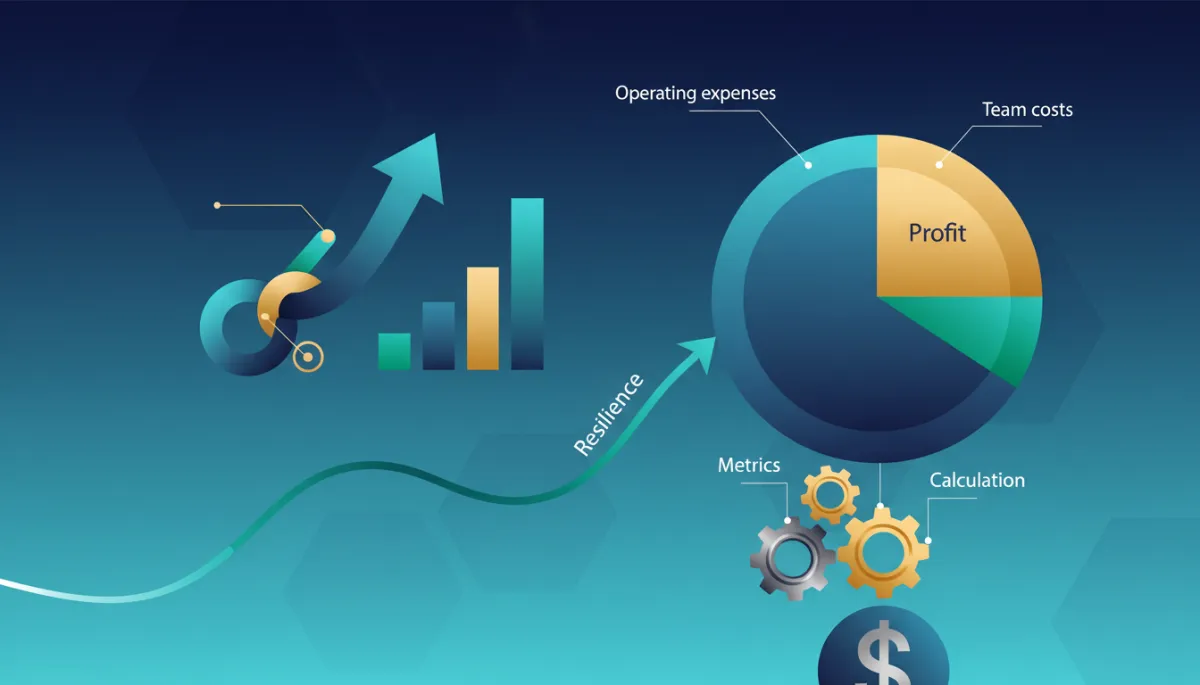
Master Gross Margin for Business Success
Finance, Gross Margin, Business Strategy
Why Knowing Your Gross Margin Is Non‑Negotiable for a Profitable, Resilient Business
If you want to build a profitable, resilient business, you must know exactly how much money you are truly making on every product, project, or retainer. That clarity starts with understanding your Gross Margin and using it as a daily decision‑making tool, not just a line on a report.
Why You Must Know How Much You Really Make on Every Sale
Many businesses celebrate revenue growth, new clients, and bigger projects—only to discover later that their bank balance tells a different story. Revenue alone can be dangerously misleading. What truly matters is how much money you keep after delivering the work or product your client is paying for. That is the money available to keep the lights on, pay your team, and generate profit.
When you know exactly how much you make on each service package, retainer, or product line, you can:
Price confidently instead of guessing what “feels fair”
Identify clients, projects, or offerings that quietly erode your profit
Decide where to double down, and what to phase out or re‑scope
At service businesses and growing firms, leaders who track this rigorously—often with support from partners like Wayne Financial Management—tend to make cleaner, faster strategic decisions. The metric at the heart of that clarity is your Gross Margin.
What Gross Margin Is and Why It Matters So Much
Gross Margin shows how much money is left from your revenue after you pay for the direct costs required to deliver your product or service. These are called Cost of Goods Sold (COGS) for product businesses, or Cost of Service Delivery for agencies and service firms.
In simple terms: Gross Margin tells you how efficiently you turn revenue into usable cash. A strong margin gives you room to invest, hire, and weather slow periods. A weak margin means you are working hard for very little reward, even if top‑line revenue looks impressive.
For service businesses, Gross Margin is especially critical because labor is often your largest cost. If your team spends more time than planned on a fixed‑fee project, your margin shrinks quickly. Without tracking it, you may not realize which engagements are profitable and which are effectively subsidized.
How Gross Margin Funds Your Operations, Team, and Profit
Every dollar of revenue first has to cover the direct cost of delivering what you sold. Only then does anything flow into the rest of your business. That “leftover” portion—your Gross Margin—is what pays for everything else:
Operating expenses: rent, software, marketing, insurance, and leadership salaries all come out of Gross Margin, not revenue in theory.
Your team: non‑billable staff and overhead related to your people are funded by a healthy margin on the work that is billable.
Profit and reinvestment: whatever remains after operating expenses becomes true profit—money you can reinvest, distribute, or use to build cash reserves.
If your Gross Margin is too low, you will feel constant pressure: difficulty hiring, limited marketing budget, and little to no owner compensation. Improving margin—by pricing correctly, managing scope, and controlling delivery costs—is often the fastest route to a healthier, more resilient business.
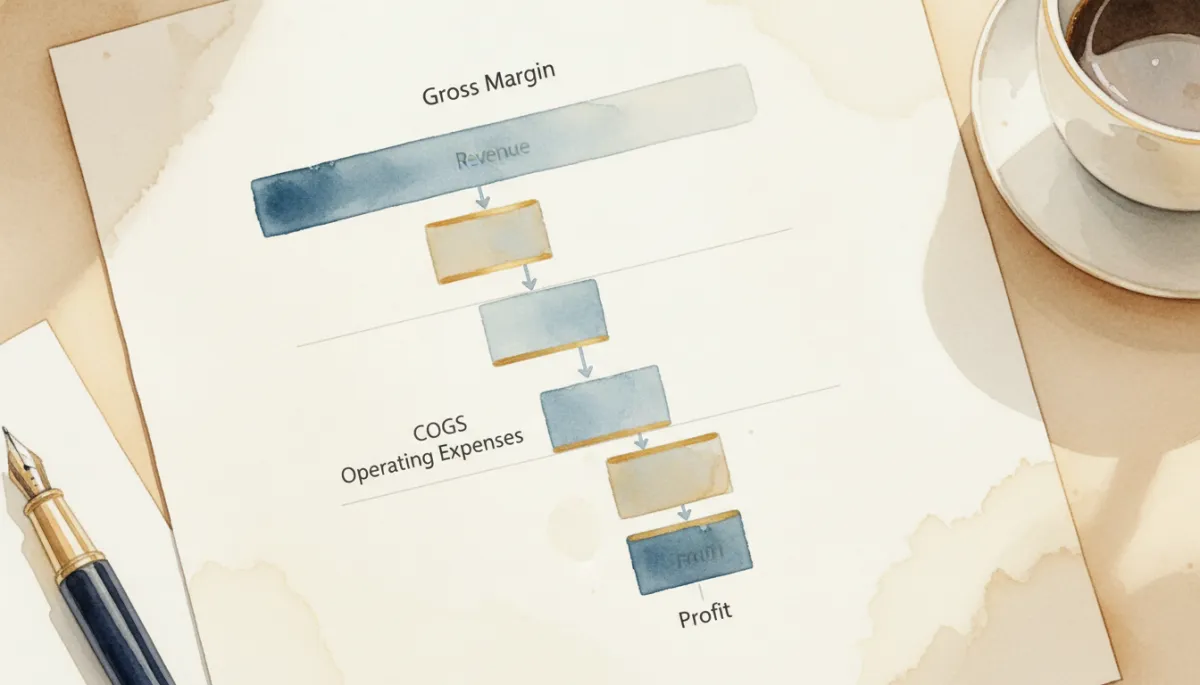
Clear gross margin visibility shows exactly how much revenue truly becomes profit.
Breaking Down the Gross Margin Calculation
The calculation itself is straightforward. The key is being disciplined and honest about what you include as direct costs.
Step 1: Start with Revenue
Take the total amount you billed and expect to collect for a period, product line, or specific service—this is your Revenue. For example service businesses, might look at revenue per client, per project, or per service type (for example, strategy, design, development, or media).
Step 2: Subtract Direct Costs (COGS or Delivery Costs)
Next, identify all costs that exist only because you delivered that specific product or service. These might include:
For service businesses: billable staff time, freelancers, white‑label partners, media spend, or project‑specific software licenses.
For product businesses: materials, manufacturing, packaging, and shipping directly tied to each unit sold.
These are your Cost of Goods Sold (COGS) or direct delivery costs.
Step 3: Calculate Gross Profit and Gross Margin
Once you have Revenue and Direct Costs, you can calculate:
Gross Profit = Revenue − Direct Costs
Gross Margin (%) = (Gross Profit ÷ Revenue) × 100
For example, if a business invoices a client $50,000 for a project and spends $25,000 on billable staff time and freelancers to deliver it, your Gross Profit is $25,000 and your Gross Margin is 50%. That 50% is what you have left to cover overhead, invest in growth, and generate profit.
💡 Practical next step: Choose one key service or product and calculate its Gross Margin this week. Use that insight to adjust pricing, scope, or delivery so your business becomes not just bigger, but stronger and more profitable.

